
The Export Papers · Part IV of IV
Cocopeat exporters in India: how to vet one before you pay a deposit
Every exporter's letterhead looks sound from the other side of an ocean. These are the checks that close the distance, from the registrations you can confirm yourself to the lab report that should name its lot, and the costly problems they prevent.
Last reviewed · 13 September 2026
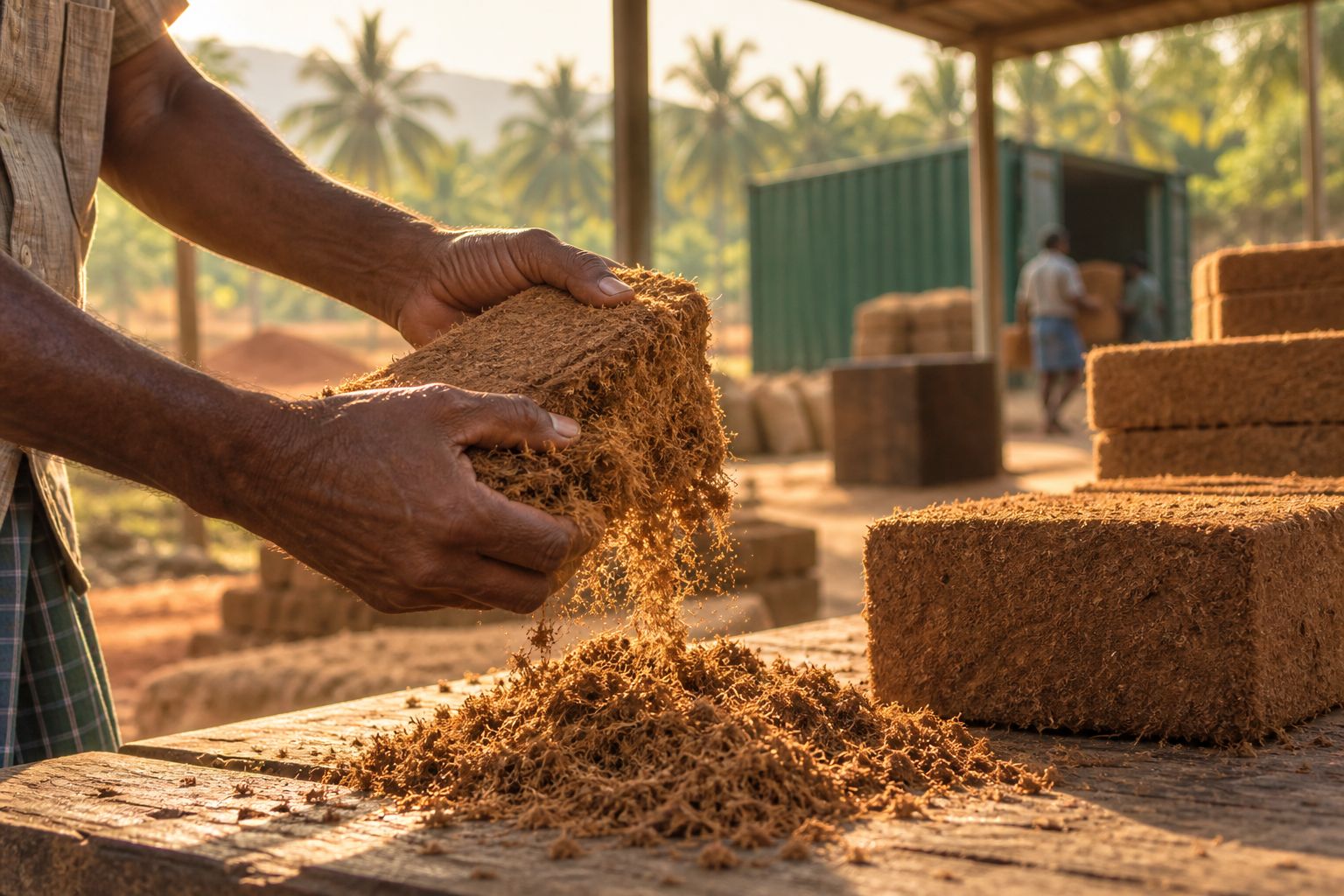
To vet cocopeat exporters in India before you pay a deposit, run five checks from your desk: IEC status, GST registration, Coir Board registration and RCMC dates, recent shipments, and a live call from the yard. Then ask for the strongest proof, an independent lab report dated and tied to a numbered lot: registrations describe a company, but a lot report describes your goods.
In short
- Five desk checks: IEC, GST, Coir Board registration and RCMC, shipment records and a live yard call.
- Trust a lab report only if it is dated, names its laboratory and lot, and states the EC method.
- Pay against documents or in stages, confirm bank details by phone, and test a sample first.
Why "top 10 cocopeat exporters" lists do not help
Lists of the top 10 coco peat exporters in India usually rank by shipment counts or paid placement, and neither tells you what will arrive in your container. A busy shipper can still load a wet lot. Use a list to find names, then vet each one the same way.
Where India's cocopeat exporters are
Buyers usually search for India's cocopeat exporters by town, in Tamil Nadu and Kerala, and the coir trade ships mainly through three southern ports.
- Tamil Nadu. Searches for cocopeat exporters in Tamil Nadu name Pollachi, Coimbatore, Thoothukudi (Tuticorin), Erode, Dindigul and Chennai. Pollachi hosts a Coir Board Regional Office, which the Board's 2017 guidelines list for exporter registrations.
- Kerala. Buyers also search for exporters across Kerala, where the Coir Board's institute, CCRI, at Kalavoor in Alappuzha, runs a coir pith testing laboratory.
- The ports. The Board's last published split (2021-22) credited Tuticorin with over 46% of coir export earnings, Cochin 34% and Chennai 20%.
For cocopeat export data from India, start with the Coir Board: coir pith was 61% of coir exports by tonnage in 2024-25. A town tells you where to look, not whom to trust, even among coir pith exporters in Pollachi; the house argues its case for Pollachi in an earlier issue.
Manufacturer-exporter or merchant exporter?
A manufacturer-exporter presses and ships its own cocopeat; a merchant exporter buys finished blocks from yards and ships them under its own name. Among cocopeat manufacturers in India and merchants alike, either can be sound if the papers trace your lot to its yard.
| Type | What it is | What to ask |
|---|---|---|
| Manufacturer-exporter | Runs the yard that washes, dries and presses the pith. | A live call from the pressing floor, and lot tags on the pallets. |
| Merchant exporter | Buys finished blocks from one or more yards. | Which yard pressed this lot, and whether every pallet comes from it. |
Five checks you can run from your desk
Before any money moves, confirm five things yourself: IEC status, GST registration, Coir Board registration and RCMC dates, recent shipments, and the yard on a live call.
- IEC status. DGFT issues the Importer Exporter Code, which must be updated every year between April and June; a DGFT trade notice of 2021 confirms that codes not updated are deactivated. For IEC code verification, check the number on the DGFT portal.
- GST registration. Check the GSTIN on the GST portal: the legal name should match the invoice and the bank account.
- Coir Board registration and RCMC. The Board's 2017 guidelines require coir exporters to register item by item, hold a five-year RCMC and file monthly export returns. They do not name coir pith, so ask the Pollachi Regional Office what applies.
- Recent shipments. Ask for two recent bills of lading, prices masked, naming the company you will pay. In trade data, look for that name under HS 5305 regularly, not once.
- A live call from the yard. Set the time yourself, see the pallets and their lot tags, and ask whether loading will be filmed to the bolt seal.
Each registration is traced in export norms in India, step by step, and Part II explains how cocopeat is exported from India.

How to read a cocopeat lab report
Read five lines, EC with its extraction method, pH, sodium, moisture and expansion, then check that the report carries a date, a named laboratory and the lot number on your invoice.
| Line | What it tells you | What to ask |
|---|---|---|
| EC | Dissolved salts. Trade guides class low-EC (washed) coir below 0.5 mS/cm and high-EC above 0.8. | The method: producers' guides warn that 1:1.5 volume and saturated media extracts read differently, so a bare figure cannot be matched to your lab. |
| pH | Acidity. EU Ecolabel criteria for growing media set 4 to 7 (EN 13037). | The method and test date. |
| Sodium | Salt left in the pith; the Ecolabel allows at most 150 mg per litre. | Units, and whether measured after washing. |
| Moisture | Water you pay freight on; producers quote about 10 to 20% at dispatch. | The figure at dispatch. |
| Expansion | Usable litres per block. | Litres and method, in the contract. |
| Date, laboratory, lot | Whether the report describes your goods. | The lot number on report, invoice and pallet tags. |
For EC, the Ecolabel sets below 1.0 mS/cm under EN 13038. The Coir Board's 2017 guidelines record that compulsory pre-shipment inspection for coir was withdrawn; the Board inspects on request, for a fee. An independent report is the buyer's own safeguard. Whether your crop needs washed or buffered pith is answered in buffered or unbuffered, told plainly.
A figure without its method and its date is an opinion with a decimal point.
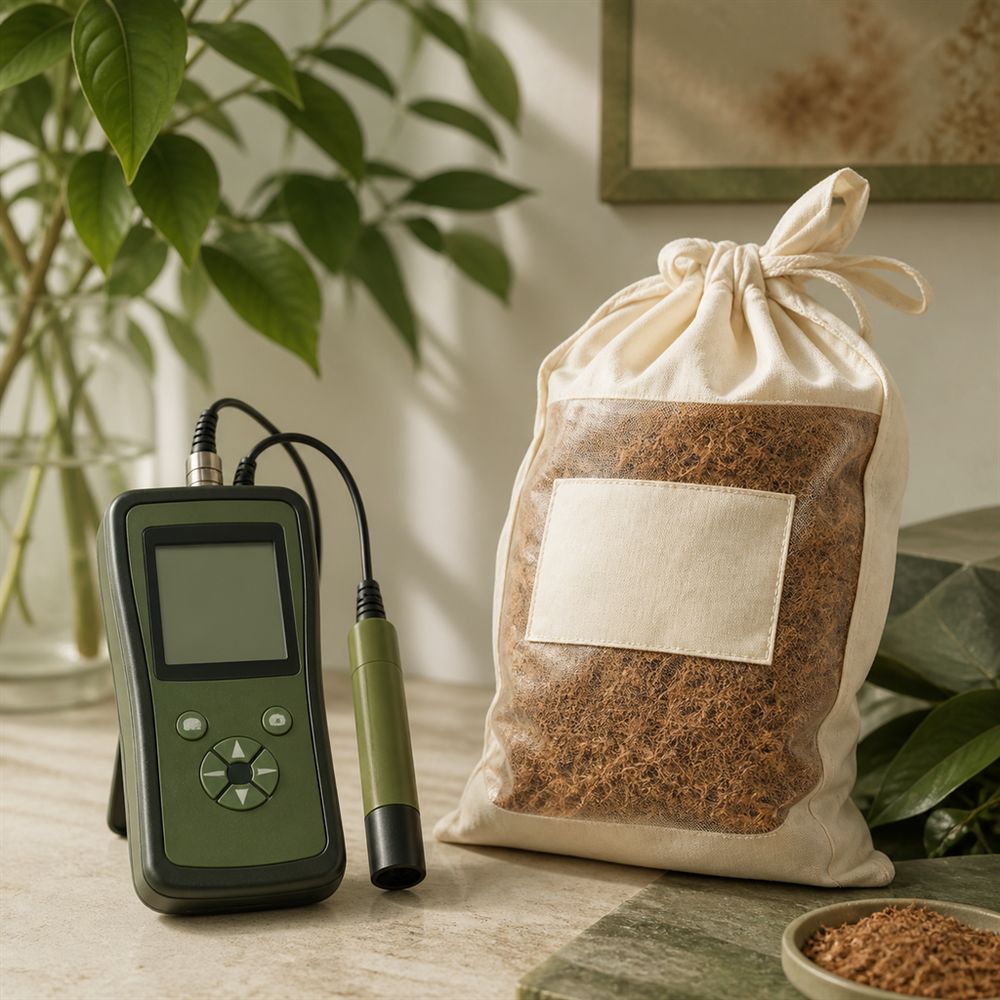
Problems that cost buyers money
The cocopeat quality problems that cost buyers money are high EC, wet blocks, short weights, blended lots, untreated pallets, customs codes and payment fraud, and each has a check that prevents it.
| Problem | Usual cause | The check that prevents it |
|---|---|---|
| High EC on arrival | Pith washed too little, or another lot's report | This lot's dated report, EC with its method, checked against your sample |
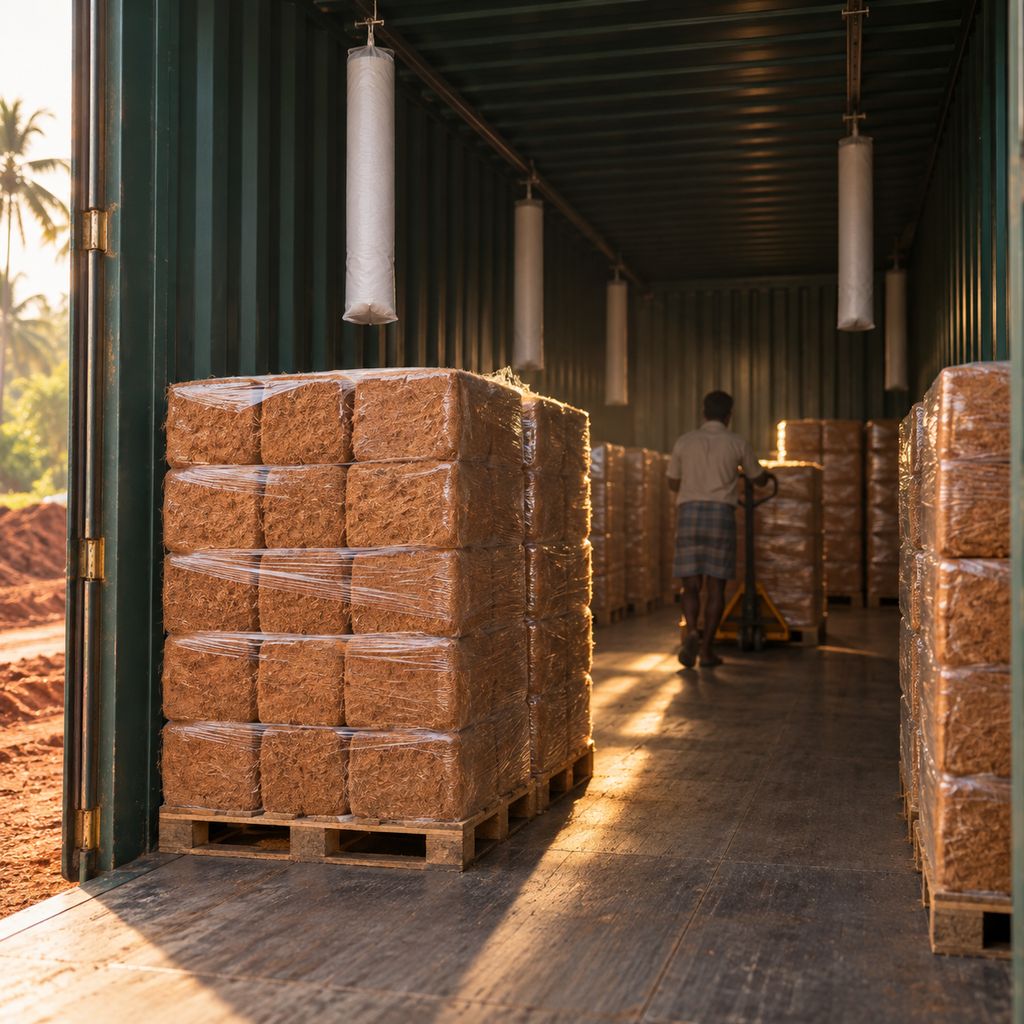
| Mould and condensation | Blocks loaded too wet; the water condenses as the container warms and cools | Moisture at dispatch on the report; wrapped pallets and desiccant poles |
| Short weight | Light blocks, or fewer per pallet than invoiced | Block weight, tolerance and count in the contract; weigh a sample on arrival |
| Blended lot | Pith mixed with compost, bark or other organic matter | A declaration of pure, unused coir: EU rules ban coir blended with other organic matter |
| Untreated pallets | Wood not treated and marked under ISPM 15 | The ISPM 15 mark on every pallet, visible in the loading film |
| Customs queries | A wrong HS code, or the waste control left unanswered | HS 5305 agreed with your broker; the UK and EU attach a waste control, and the UK expects code Y923 for goods that are not waste |
| Advance-payment fraud | Bank details changed by email, or a name with no yard behind it | A letter of credit or staged payment, with bank details confirmed by phone |
Rules differ by destination, so check the import rules at your port before you sign.
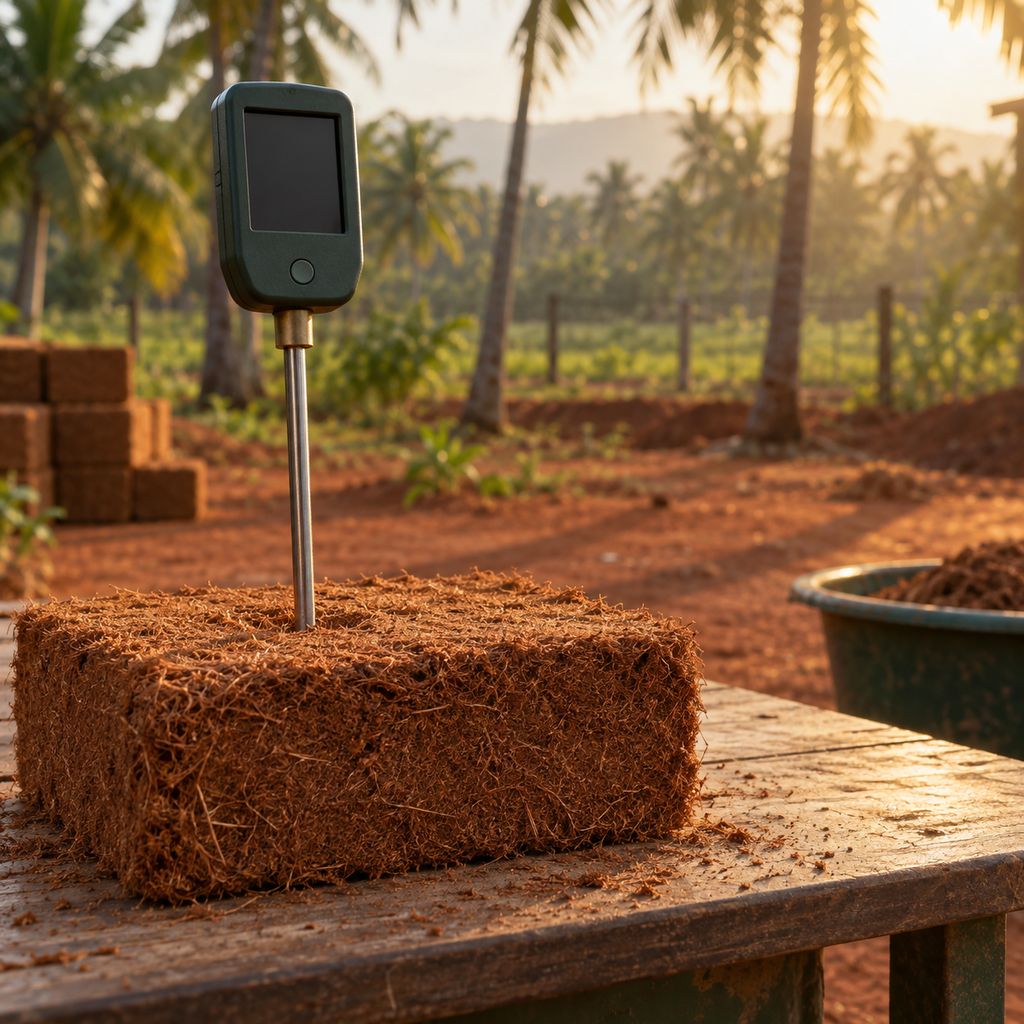
Red flags in a first quote
The red flags in a cocopeat supplier's first quote are a price without a specification, a specification without a method, and a request for money before any proof.
- EC with no method, date or laboratory.
- One lab report for every shipment, or none with a lot number.
- Tonnage above producers' figures for a 40 ft high cube: 22 to 24 tonnes of 5 kg blocks palletised, or up to about 26 floor-loaded.
- Full payment in advance, or bank details changed by email.
- No live yard call and no filmed loading.
- Blended media offered for an EU port.
The buyer's checklist
This is how to choose a cocopeat exporter from your desk: paste the list into your first email and see who answers every line in writing.
- Your IEC number, updated this year.
- Your GSTIN and the legal name on invoices and bank account.
- Your Coir Board registration and RCMC, with dates.
- Two recent bills of lading, prices masked.
- A live video call from the yard, at a time we choose.
- A dated, independent lab report for our lot: EC with method, pH, sodium, moisture, expansion.
- One lot number on report, invoice, packing list and pallet tags.
- Block weight, blocks per pallet and moisture at dispatch in the contract.
- ISPM 15 pallets, and loading filmed to the bolt seal.
- A letter of credit or staged payment; bank details confirmed by phone.
- A sample before a container.
Questions buyers ask
How do I verify an Indian exporter's IEC?
Ask for the IEC number and check its status with DGFT, the Directorate General of Foreign Trade, which issues the code. Every IEC must be updated each year between April and June, and a DGFT trade notice of 2021 confirms that codes not updated are deactivated.
What certificates should a cocopeat exporter have?
Expect an active IEC, GST registration, and Coir Board exporter registration with a five-year RCMC, which the Board's 2017 guidelines require of coir exporters; its Pollachi Regional Office can confirm what applies to coir pith. Each lot should carry an independent lab report, plus a phytosanitary certificate where your country requires one.
What is low EC cocopeat?
Low EC cocopeat is washed coir pith with few dissolved salts left in it. Trade guides class it below 0.5 mS/cm, and high-EC material above 0.8. The figure means little without its method, because different extraction methods give different readings from the same pith.
Why does cocopeat go mouldy in a container?
The usual cause is water already in the blocks, which condenses as the container warms and cools at sea. Producers quote moisture at dispatch between about 10 and 20%, so ask for the figure on the lot report, and agree wrapped pallets and desiccant poles before loading.
Should an exporter publish lab results?
Yes. A published report, dated, from a named laboratory and tied to a lot number, lets a buyer compare the paper with the pallet before paying. The Coir Board's 2017 guidelines record that compulsory pre-shipment inspection for coir was withdrawn, and the Board now inspects only on request, so an independent report is the buyer's own safeguard.
Are "top 10 exporter" lists reliable?
Not as proof of quality. Such lists usually rank by shipment counts or paid placement, which says nothing about the lot in your container. Use them to find names, then run the same checks on each: IEC status, GST, Coir Board registration and RCMC, shipment records, a live yard call and a dated lab report tied to a numbered lot.
The same checklist, answered by the house
If you are weighing Pollachi Coir as your low-EC cocopeat exporter in India, the list applies to the house first. Pollachi Coir is a UK company (company number pending), with family verification at the yard in Pollachi. Every lot's independent laboratory certificate is published on the verification page before dispatch, the house's summary first and the laboratory's own report reproduced whole. EC is read by the 1:1.5 method, and the washed low-EC coir reads at or under 0.50 mS/cm.
Loadings are filmed, and one serial follows the order from quote to kerb. A pallet is 180 five-kilo blocks, about 900 kg, under one lot serial and one certificate. The published band is £749 to £899 per pallet ex VAT, delivered kerbside in the UK, or £13,500 to £17,000 ex VAT for a container of twenty-one pallets. See how Pollachi Coir publishes its lab certificates, or begin with a sample kit before a pallet.