The Export Papers · Part III of IV
Cocopeat import rules by country: what each market requires of Indian coir
A container is cleared by the country it sails to, not the one it leaves. Here is what each market asks of Indian cocopeat, taken from the official sources and dated, so the papers are right before the doors are sealed.
Rules last verified · 13 September 2026
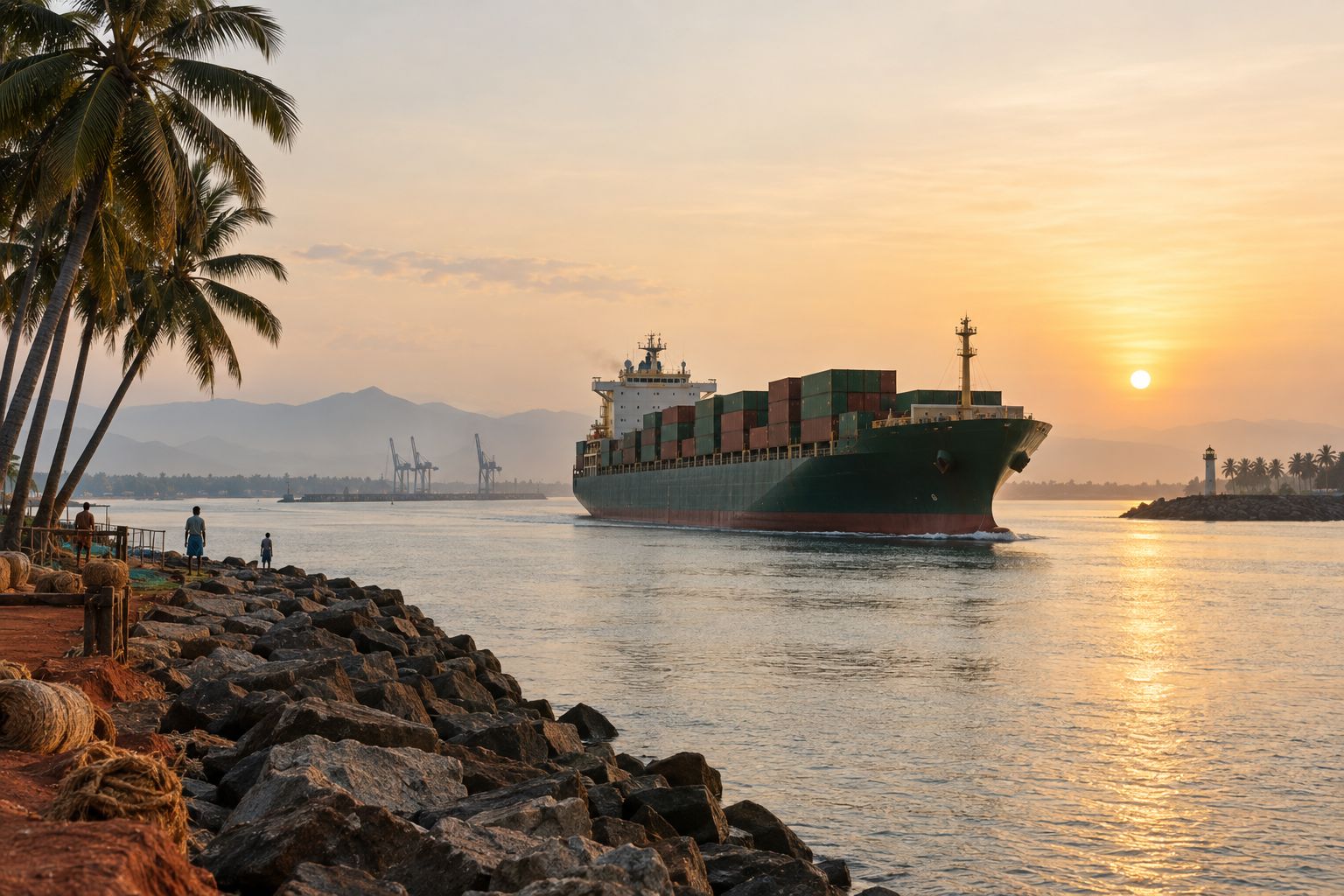
Cocopeat import rules by country are simplest in Europe: pure, unused coir enters the EU and the UK at 0% duty. Neither the EU's plant-health annex nor the UK tariff lists a phytosanitary certificate for coir shipped alone. Asia is stricter: Japan requires a certificate and an arrival inspection, China's growing-media rule adds producer registration, and South Korea's rules point the same way. Australia inspects every consignment, the USA adds a 10% tariff to most Indian goods, and the EU bans coir blended with other organic matter.
In short
- EU: pure, unused coir only, at 0% duty; blends with other organic matter are banned.
- UK: 0% duty on 5305 00 00 00, 20% import VAT, and code Y923 to declare the goods are not waste.
- Japan and China: a phytosanitary certificate and an inspection; China's 2024 rule adds registered producers and bilingual bags.
- USA: no duty on HTS 5305.00.00, but a 10% Section 301 tariff on Indian goods since 24 July 2026.
- Australia: no permit for plain coir peat that meets BICON's conditions, and an inspection of every consignment.
Why the destination decides the paperwork
India issues the papers, but the importing country decides which papers a container needs. PPQS, India's plant protection organisation, inspects a lot, tests samples against the importing country's requirements and issues a phytosanitary certificate in the ISPM 12 format. Only the destination says whether that certificate is needed at all.
Three sets of rules meet at the port of arrival: plant health, customs and packaging. This page covers all three for the markets that buy the most Indian coir. The Indian side, from registration to loading, is in the full cocopeat export guide.
The papers are written in India; they are read at the far port.
Cocopeat import rules at a glance
Where the official source could not be verified, the cell says so: confirm those points with your importer or broker before booking.
| Market | Import permit | Phytosanitary certificate | Treatment or inspection | Duty on 5305 | Note |
|---|---|---|---|---|---|
| USA | Not verified; ask APHIS or your broker | Not verified; ask APHIS or your broker | Confirm with your broker | Free, plus 10% Section 301 on Indian goods | Coir appears to pay the 10%; confirm with a US customs broker |
| China | Producer registered through PPQS and recommended to GACC (2024 draft rule) | Yes, ISPM 12, every lot | Pre-export inspection; free of listed pests, seeds and soil | Confirm with your importer | Sealed new bags labelled in Chinese and English |
| EU (incl. Netherlands, Spain, Italy) | None shown in TARIC | None listed for coir shipped alone | No plant-health measure in TARIC; waste import control since 21 May 2026 | 0% | Pure, unused coir only; blends banned |
| UK | None shown in the UK tariff | None shown in the tariff for 5305 | ISPM 15 wood packaging; Y923 not-waste code | 0%, and 0% under CETA | 20% import VAT |
| Australia | Not needed if BICON conditions are met; needed with additives | Read the live BICON case | Verification inspection of every consignment | Free | No soil, live insects or viable plant material |
| Japan | Confirm with your importer | Yes | Import inspection; failed lots disinfected, destroyed or returned | Free | Soil banned outright |
| South Korea | Confirm with your importer | Yes, for plant products (secondary source) | Declaration and inspection on arrival | Confirm with your importer | Soil, and plants in decomposed media, banned |
| Canada | Confirm in CFIA's AIRS | Confirm in CFIA's AIRS | Confirm with your importer | Confirm with your importer | Ground coconut husk approved for plants in media |
| UAE | Confirm with your importer | Yes, for release (general MOCCAE rule) | Confirm with your importer | Confirm with your importer | Release also needs a certificate of origin, bill of lading and invoice |
CFIA's directive D-96-20 lists ground coconut husk as an approved medium for plants imported rooted in media, but the rules for coir shipped alone were not verified. Check CFIA's Automated Import Reference System (AIRS) for HS 5305 from India.
The order of this page follows the money. In 2024-25 India exported coir to 121 countries, and coir pith, which is cocopeat, made up 61.16% of the tonnage. The Coir Board does not split pith by country, so the shares below cover all coir products.
| Market | Share of value |
|---|---|
| USA | 24.46% |
| China | 22.10% (and 37.81% of the tonnage) |
| Netherlands | 7.54% |
| Spain | 4.84% |
| United Kingdom | 4.77% |
| South Korea | 4.39% |
| Peru | 3.83% |
| Australia | 2.97% |
| Germany | 2.62% |
| Italy | 2.30% |
United States
The USA charges no duty on coir itself, but Indian goods have paid a 10% Section 301 tariff since 24 July 2026. Confirm the plant-health papers for bare coir with APHIS or a US customs broker before booking.
On plant health, the verified federal text is narrow. 7 CFR 319.37-8 lists coir as an approved growing medium for plants imported in media, which governs coir under a plant, not coir shipped alone. APHIS's plant growth enhancer page (25 January 2026) exempts processed peat free of plant parts and seed, but does not name coir.
So the documents required for export to the USA from India divide in two. The Indian side is set out in export norms in India. On the US side, whether bare cocopeat needs a permit or a phytosanitary certificate could not be verified for this page, so get the answer from a broker, in writing.
China
China's growing-media rule, notified to the WTO in May 2024, admits coir and coco peat, but only from registered producers, in sealed bilingual bags, with an ISPM 12 phytosanitary certificate for every lot.
China is the largest buyer of Indian coir by volume, and cocopeat export to China runs on registration. The rule, G/SPS/N/CHN/1300, was notified as a draft on 14 May 2024, with entry into force expected on 1 December 2024. The text read for this page is an unofficial translation published by the USDA's Foreign Agricultural Service, and final adoption was not verified. Under that text:
- The producer is registered by the exporting country's plant protection authority, which for India is PPQS, and recommended to GACC; registration lasts five years.
- The coir is unused, dry and free of listed pests, such as Meloidogyne and Pratylenchus nematodes, and of seeds, soil and plant residues.
- Bags are sealed and new, labelled in Chinese and English with the media name, place of production and the producer's name or registration number.
- Before export, the lot is inspected and issued an ISPM 12 certificate, which states any treatment applied.
Lots without a valid certificate, from an unregistered producer or containing soil are returned or destroyed. Whether any Indian producer is on GACC's list was not verified, so ask your importer to confirm the registration number before the contract is signed.
European Union and the Netherlands
The EU admits coir only if it is pure and unused. Duty is 0%, and no phytosanitary certificate is listed for coir shipped alone.
Implementing Regulation (EU) 2019/2072, Annex VI point 20, bans growing media from third countries unless "composed entirely of peat or fibre of Cocos nucifera L." and not previously used for growing plants or for any agricultural purpose. Pure, unused coir pith, chips and grow-bag fill are therefore admissible. Coir blended with compost, bark or other organic material is banned, so have any blend confirmed by the importing member state.
Annex XI Part A lists growing medium attached to or associated with plants among goods needing a phytosanitary certificate, with no entry for coir alone. The case for no certificate rests on that absence, and some buyers still ask for one. TARIC shows 0% duty and no plant-health measure on CN 5305 00 00 from India. It does show a waste import control since 21 May 2026, so declare the coir as a product, not waste.
Spain and Italy apply the same rules. The EU-India trade agreement, concluded in January 2026, is not in force and changes nothing at 0% duty. The EU Deforestation Regulation's scope (cattle, cocoa, coffee, oil palm, rubber, soya and wood) does not cover coir.
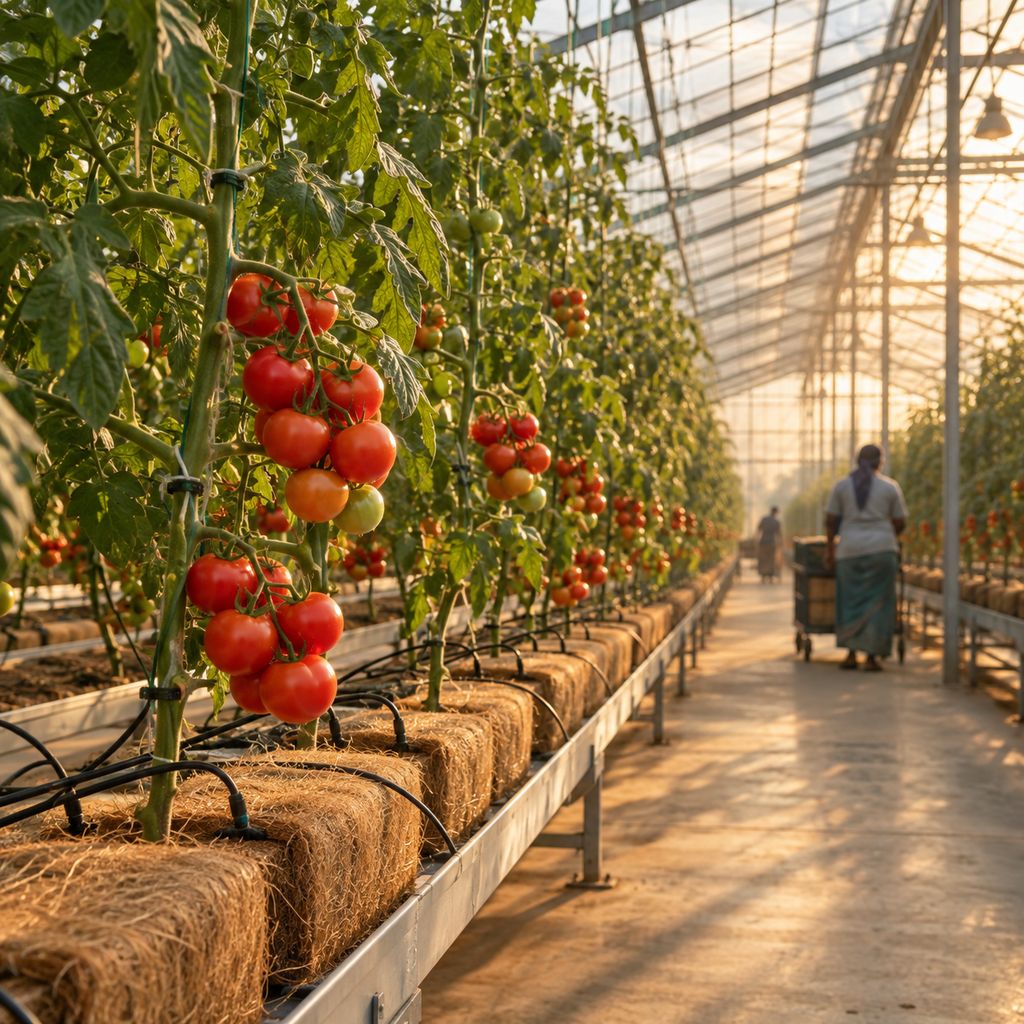
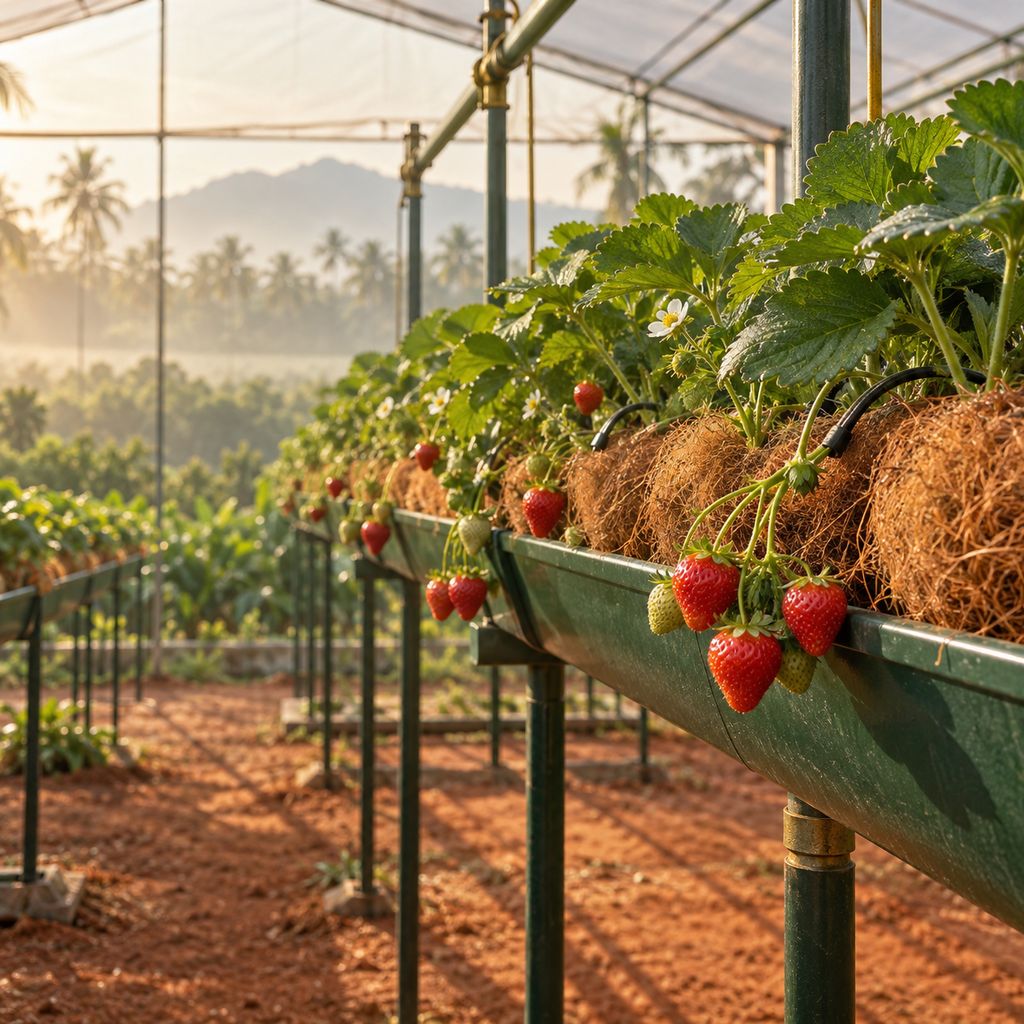
In the Netherlands, quality questions come from RHP rather than the law. RHP, a knowledge centre for substrates since 1963, runs a private mark covering water uptake, air content, pH, EC and nutrients. Brands sell RHP certified cocopeat as a quality signal, but no import rule requires it.
Transit adds time: at 1 September 2026, trade press reported some carriers testing Suez returns while most still sailed around the Cape.
United Kingdom
The UK charges 0% duty on cocopeat under 5305 00 00 00, under both the standard tariff and the India-UK agreement in force since 15 July 2026. Import VAT is 20%, and goods that are not waste are declared with code Y923.
That makes importing cocopeat from India to the UK one of the simpler routes on this page: with no duty either way, the border cost is the 20% import VAT.
The tariff attaches a waste import control to 5305, answered by document code Y923. It shows no phytosanitary certificate measure for 5305, though that measure appears on cut flowers under 0603, so nothing on the tariff flags a certificate or IPAFFS pre-notification for coir. The Great Britain text of the coir exemption could not be checked for this page; confirm blends, or coir sold with plants, before ordering.
Wood packaging must meet ISPM 15: treated pallets bearing the mark. This is the route the house sells on, by the pallet of 180 five-kilo blocks, about 900 kg, under one lot serial and one certificate. Each lot's independent laboratory certificate is published on the verification page.
Australia
Australia admits plain coir peat without an import permit when the conditions in BICON's coir peat case are met, requires a permit for coir peat with additives, and inspects every consignment on arrival. Duty is free.
For coir pith export to Australia, the rulebook is BICON, the Australian government's biosecurity import conditions database. Its coir peat case, as read for this page in September 2026, covers coir used as a growth medium, mulch or fertiliser, usually shipped as compressed bricks or bales. Coir peat with additives presents a different risk and needs a permit.
Every consignment gets a verification inspection at an approved arrangement site. The goods must be free of live insects, soil, mud, clay, faeces and viable plant or animal material.
Whether the case also requires a phytosanitary certificate or a treatment was not visible in the text available for this page. Read the live BICON case, or have your broker read it, before the booking is made. The Australian tariff lists coir as Free.
Japan and South Korea
Both treat cocopeat as a plant-quarantine item. Japan requires a phytosanitary certificate and an import inspection for coco peat, and South Korea's rules point the same way.
Japan's Plant Protection Station lists coco peat, with peat moss, sphagnum and bark, among items needing an exporting-country phytosanitary certificate and an import inspection. Soil, and plants with soil, are banned whatever their origin. Lots that fail inspection are ordered disinfected, destroyed or returned, and duty is Free in Japan's schedule of 1 April 2026.
For Korea, the source is secondary: the Polish plant health authority's English summary of Korean rules. Korea bans soil, including plants placed in decomposed organic matter such as coco peat, and requires a phytosanitary certificate and an inspection on arrival for plants. Cocopeat-specific conditions and Korea's duty on 5305 could not be verified, so ask your importer to confirm both.
UAE, Saudi Arabia and the Gulf
For the UAE, MOCCAE's general rules apply: release needs a certificate of origin, a phytosanitary certificate, the bill of lading and the invoice. No cocopeat-specific UAE permit, and no Saudi rule, could be verified for this page.
Anyone planning to export from India to the UAE should read those as general plant-product rules, not a coir listing. MOCCAE also requires packages of plant origin to carry a certificate statement that they were processed, naming the treatment. For Saudi Arabia, ask your importer which rules of the Ministry of Environment, Water and Agriculture apply.
Why cocopeat containers get held, and how to prevent it
Each reason below is a rule from the sections above, seen from the quay, matched to the Indian-side paper or test that answers it before the doors are sealed.
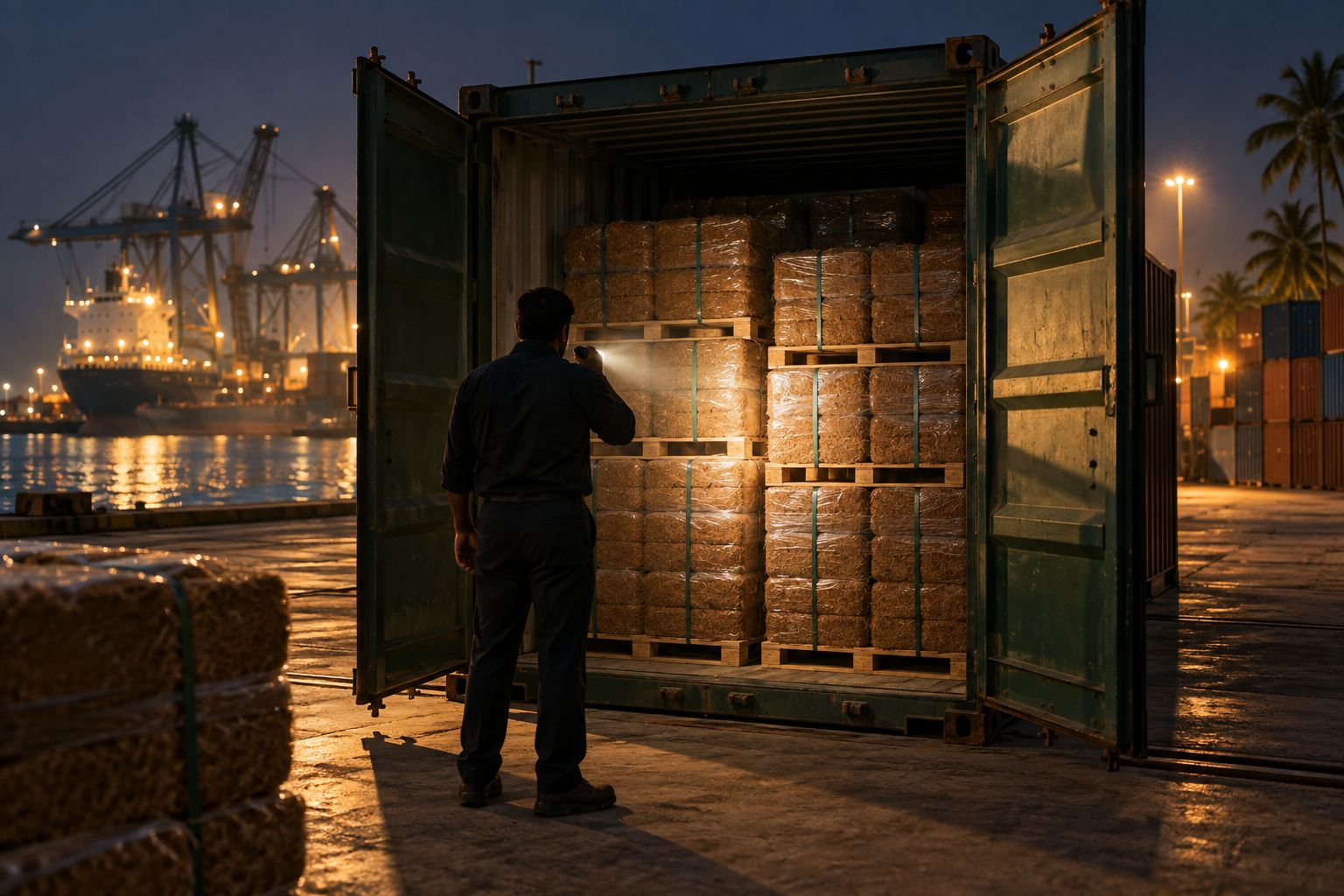
| Reason | What the destination sees | What prevents it on the Indian side |
|---|---|---|
| Soil, seeds or pests | Japan, Korea and China ban soil; China lists nematodes and seeds; Australia checks for live insects | Clean, washed pith, and PPQS inspection against the destination's list |
| Blended media into the EU | Growing media with other organic matter, banned under Annex VI point 20 | Ship 100% coir; confirm any blend with the member state first |
| Missing phytosanitary certificate where required | Japan and China require one; the UAE needs one for release | An ISPM 12 certificate applied for on PQMS before sailing |
| Unregistered producer for China | Lots returned or destroyed under the 2024 rule | Producer registered through PPQS and recommended to GACC |
| Pallets without ISPM 15 marks | Wood packaging that fails the ISPM 15 rule | Treated pallets bearing the ISPM 15 mark |
| Waste-code declaration in the UK and EU | A waste import control on 5305; the UK expects Y923 for goods that are not waste | The right code on the declaration, with the goods described as coir pith |
| Wrong HS code | EU growing-media codes (ex 2530, ex 2703, ex 3101, ex 3824 99 93) invite growing-media checks | Declare under 5305; India's export line for coir pith is 5305 00 40 |
The rules decide whether a container clears; the lot decides whether the buyer accepts it. Before any deposit, check the exporter behind the shipment.
Cocopeat import rules: your questions answered
Do you need a permit to import cocopeat into the USA?
That could not be verified for this page. US rules list coir as an approved medium for plants imported in growing media (7 CFR 319.37-8), which does not settle coir shipped alone. Ask APHIS or a US customs broker, and budget for the 10% Section 301 tariff on Indian goods.
What is the UK import duty on cocopeat?
The UK import duty on cocopeat is 0% under commodity code 5305 00 00 00, both at the standard rate and for India under the trade agreement in force since 15 July 2026. Import VAT is 20%, and goods that are not waste are declared with code Y923.
Does the EU need a phytosanitary certificate for coir?
Not for pure coir shipped alone, on the EU's own lists. Annex XI Part A of Regulation (EU) 2019/2072 names growing media attached to or associated with plants, with no entry for coir on its own. That is an inference from absence, and some buyers still ask for one.
What are Australia's rules for coir peat?
BICON's coir peat case sets them. Plain coir peat needs no import permit when its conditions are met, but coir peat with additives does. Every consignment is inspected and must be free of live insects, soil and viable plant material. Duty is free; check the live case before booking.
Can China import Indian cocopeat?
Yes, under the growing-media rule China notified to the WTO in May 2024, which permits coir and coco peat. The producer must be registered through PPQS and recommended to GACC, bags must be new, sealed and bilingual, and each lot needs an ISPM 12 certificate. Final adoption was not verified.
Why are cocopeat containers held at customs?
The regulatory reasons are few: soil, seeds or live pests; blended media entering the EU; a missing phytosanitary certificate where one is required; an unregistered producer for China; pallets without ISPM 15 marks; a missing not-waste code in the UK or EU; or the wrong HS code. Each is preventable before loading.
For UK buyers, the rules above come down to a pallet: 0% duty, 20% import VAT, a Y923 code and ISPM 15 wood beneath the blocks. The band is £749 to £899 a pallet ex VAT, delivered kerbside, and the UK pallet prices, delivered, are published in full. Every other market reads different papers at a different port, so ask for a container quote to your port, and name the port.