Porul Achi · The Land of Wealth
Pollachi
பொருள் ஆட்சி · செல்வத்தின் நிலம்
The coir capital of the world, told properly: the name, the market, the mountains, the tree, and the word the whole trade borrowed from Tamil without knowing it.
The Name
Porul Achi, the land of wealth
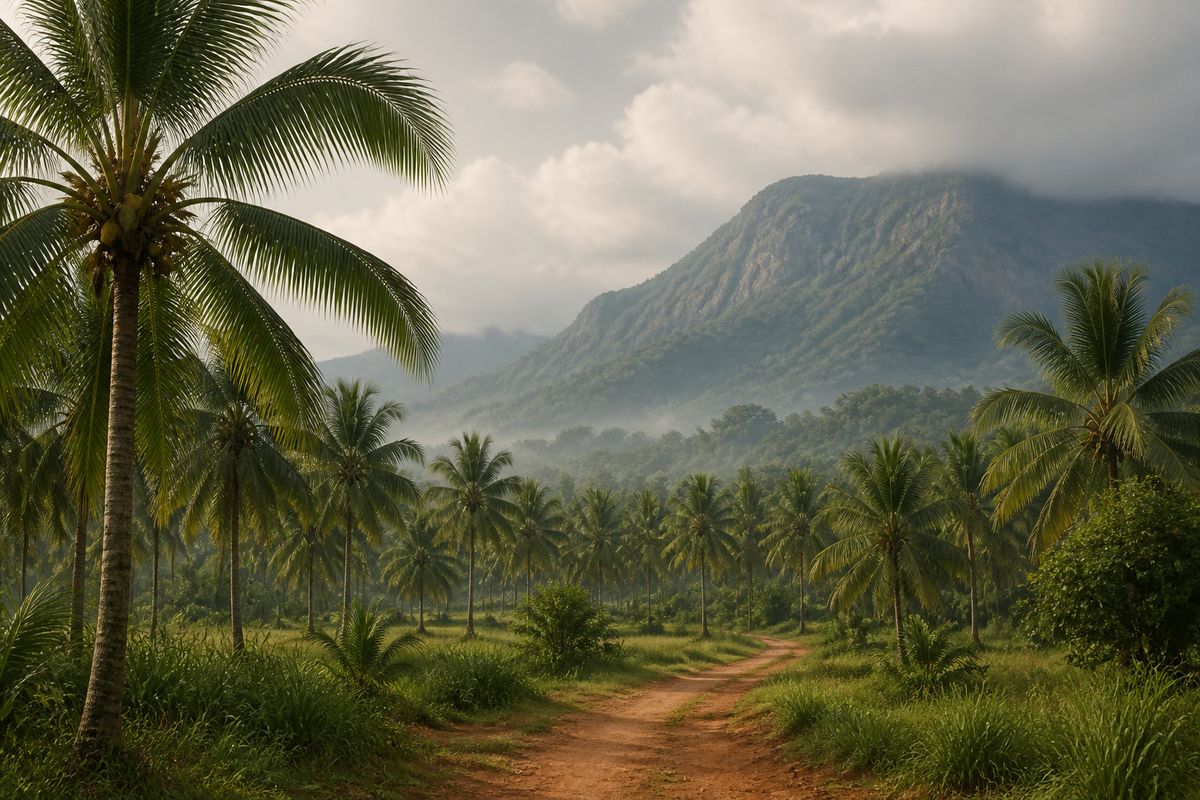
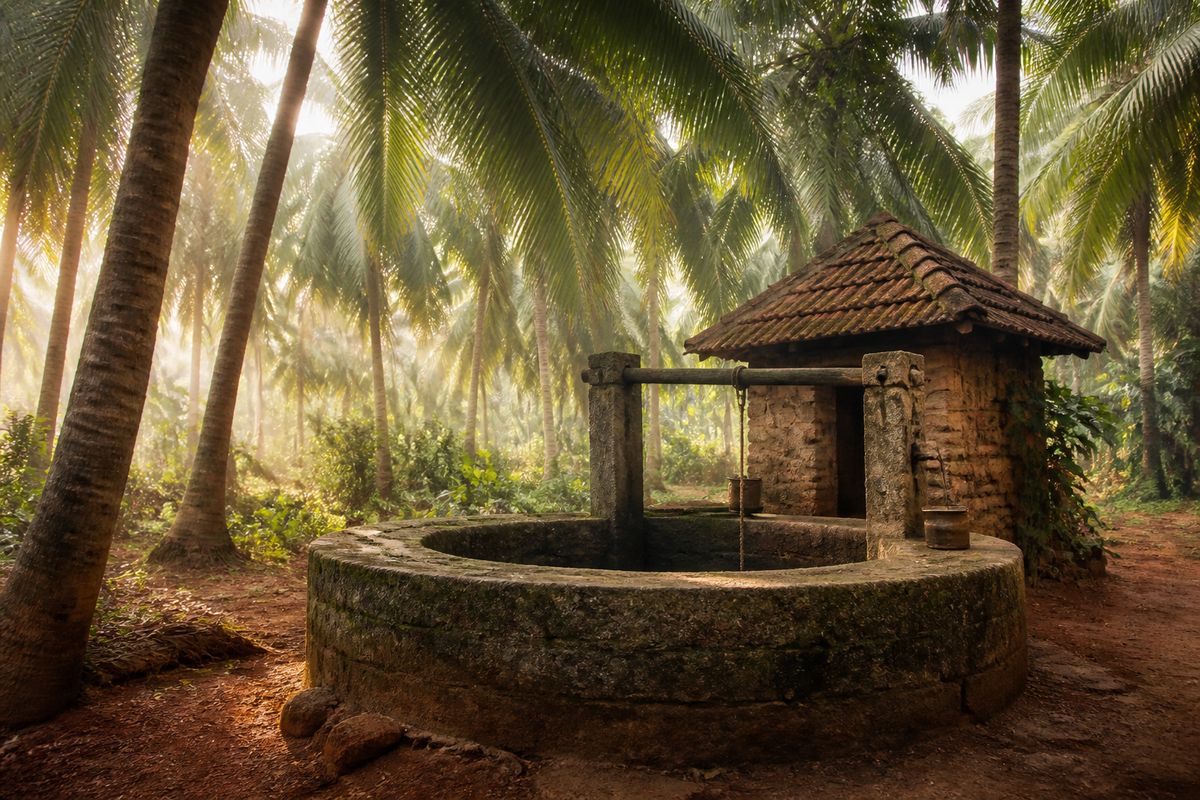
Pollachi's old name says what the town is. Sitting in the rain shadow of the Anaimalai range of the Western Ghats, watered by the Aliyar works and rooted in red laterite earth, this belt grew into the densest coconut country in India: the highest coconut acreage blocks of Coimbatore district, inside a region of roughly 1.2 lakh hectares of palms.
Dry air for curing, mountain water for washing, and ten million palms for husk: the geography did not merely permit a coir industry; it designed one.
The Market
Two hundred Tuesdays a century
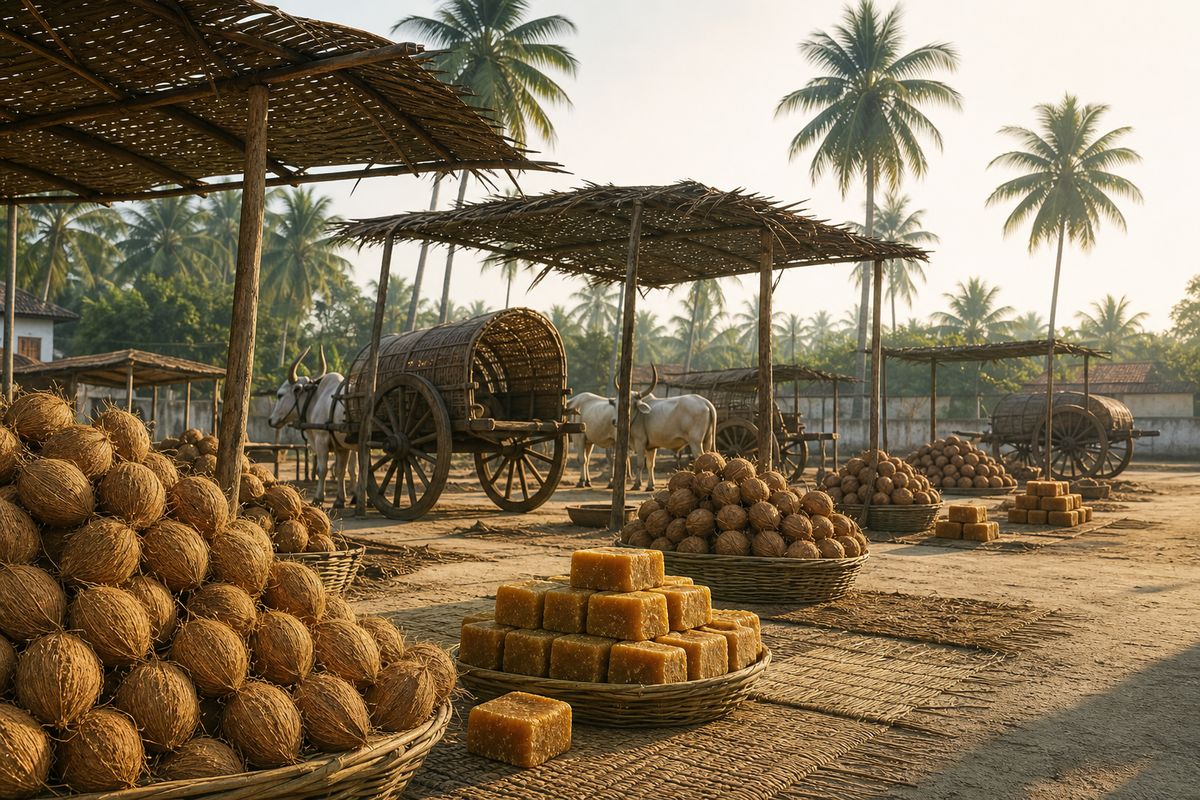
For some two hundred years the Pollachi sandhai has gathered every Tuesday: cattle, coconut, copra and the jaggery that made the town famous across Asia. The market taught Pollachi its trade manners: goods judged in the open, prices spoken aloud, a handshake that holds.
The house's public register and published certificates are not a modern invention. They are the sandhai's manners, written down.
The Tree
Kalpaka viruksham, the tree of plenty
Tamil tradition calls the coconut palm the kalpaka viruksham, the wish-granting tree, because nothing of it is wasted: the leaf thatches the roof and weaves the basket, the timber frames the house, the kernel feeds, the water refreshes, the shell burns clean, and the husk gives fibre and pith. A Pollachi family may hold palms planted by a great-grandparent; the tree gives for sixty years and asks for little.
Coir and its pith are the tree's last gift: the husk that once smoked in heaps beside the mills now grows the world's tomatoes, mushrooms and seedlings. The estate's work is simply to carry that last gift out of the grove with its dignity intact.
The People
The grove is worked by hand
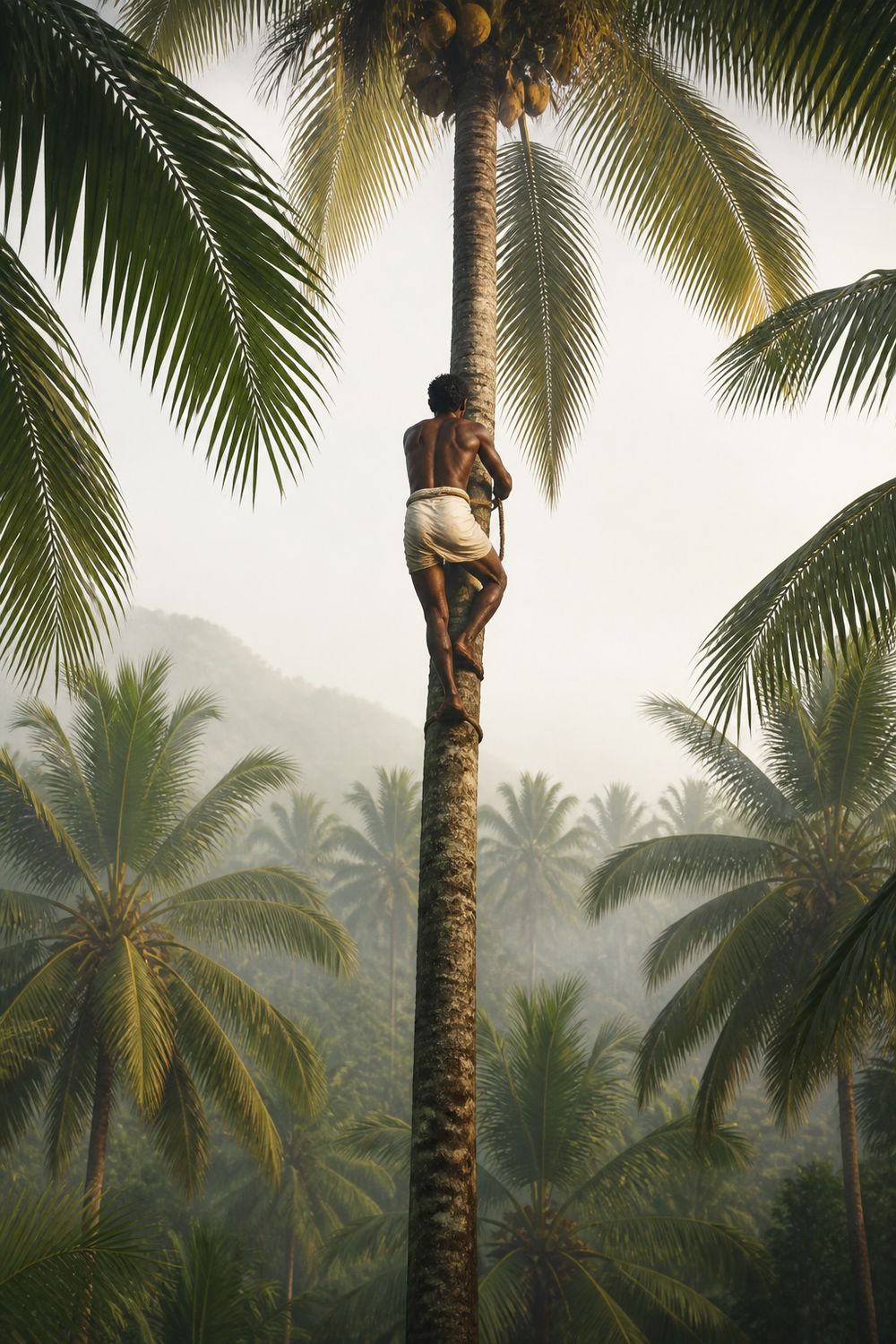
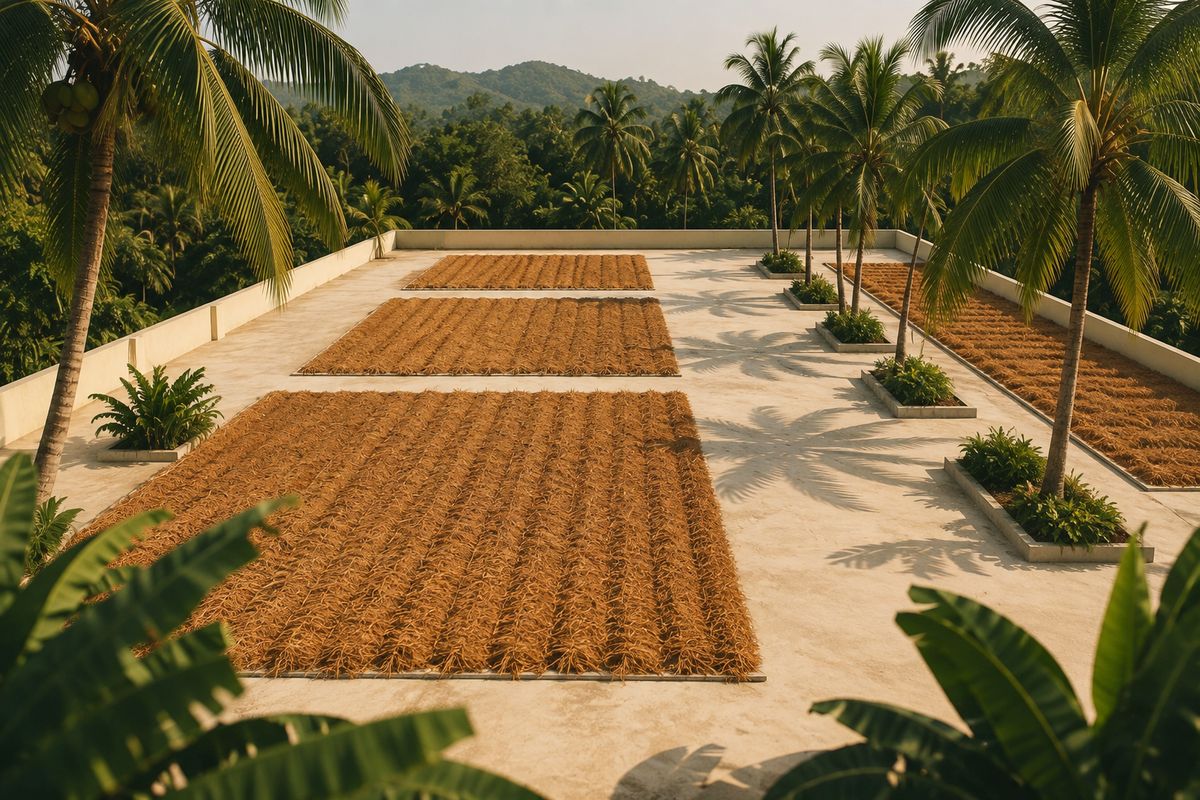
The palm is climbed, not harvested by machine. The husk is turned by hand on the drying yards, the pith raked into its squares each morning and gathered before the dew. The house's films exist so that the buyer of a pallet in Britain can see these hands, and so that the hands are named.
The Industry
Five hundred yards of gold
Around five hundred coir units work the Pollachi cluster, from family yards to export mills: a concentration recognised by the Government of India's Coir Board with its own named cluster programme. Most of the world's coir pith passes, at some point, within a morning's drive of the town.
The industry has known hard seasons, and recent years tested it harshly. The house's answer is the only durable one: pay promptly, publish honestly, and put the town's name on the finest of what it makes.
The Word
Coir is a Tamil word
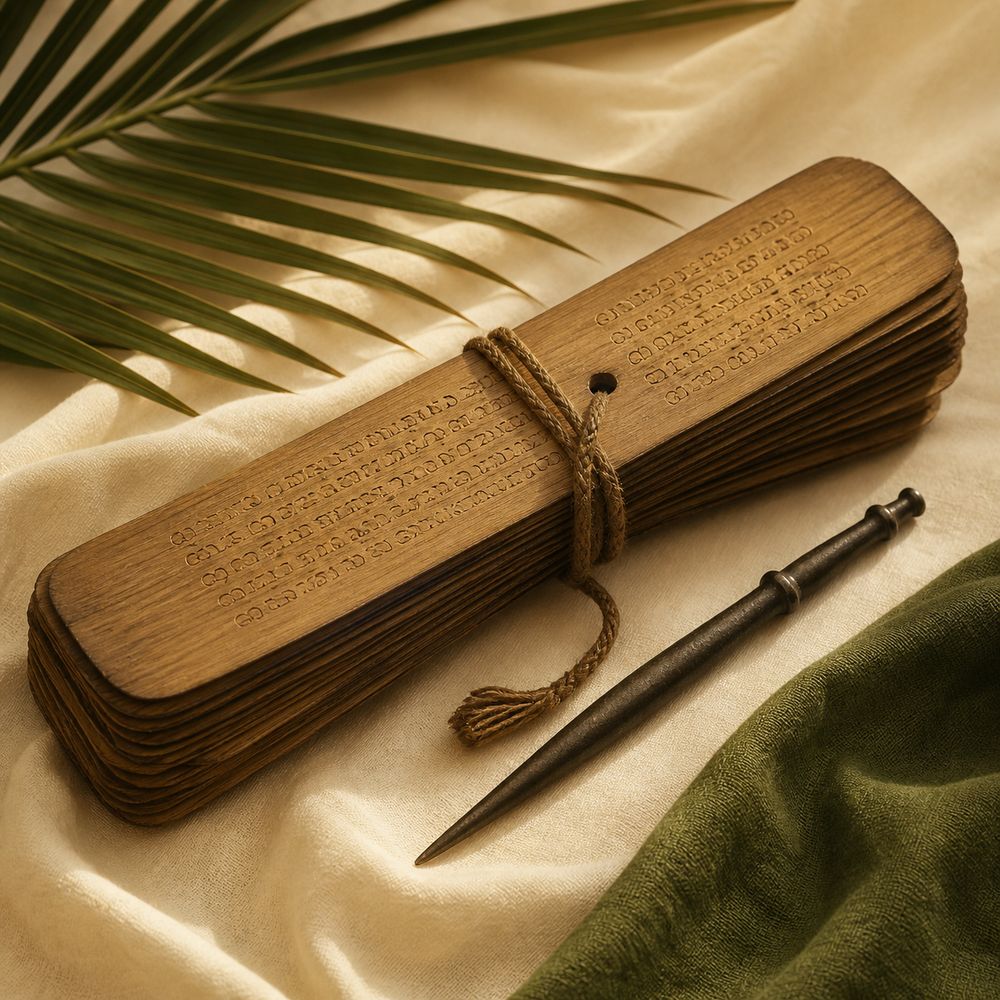
Before the palm paid Pollachi's bills, its leaves carried the Tamil classics. Every great work of the language survived on olai chuvadi, palm-leaf manuscripts incised with an iron stylus; the very roundness of Tamil letters exists because a straight stroke would split the leaf. The palm was the region's paper before it was its produce.
And the debt runs through the trade's own vocabulary: the English word coir is the Tamil kayiru: rope. Every buyer, every port manifest, every rival brand speaks a Pollachi word without knowing it. This house exists to say it correctly, and to put the town's name where it has always belonged: on the finest coir in the world.