
Field Notes · Origin
A morning in the drying yards
Between the husk and the block stand six weeks of sun; this is an account of one morning inside them, spent on the red earth where the fibre is cured.
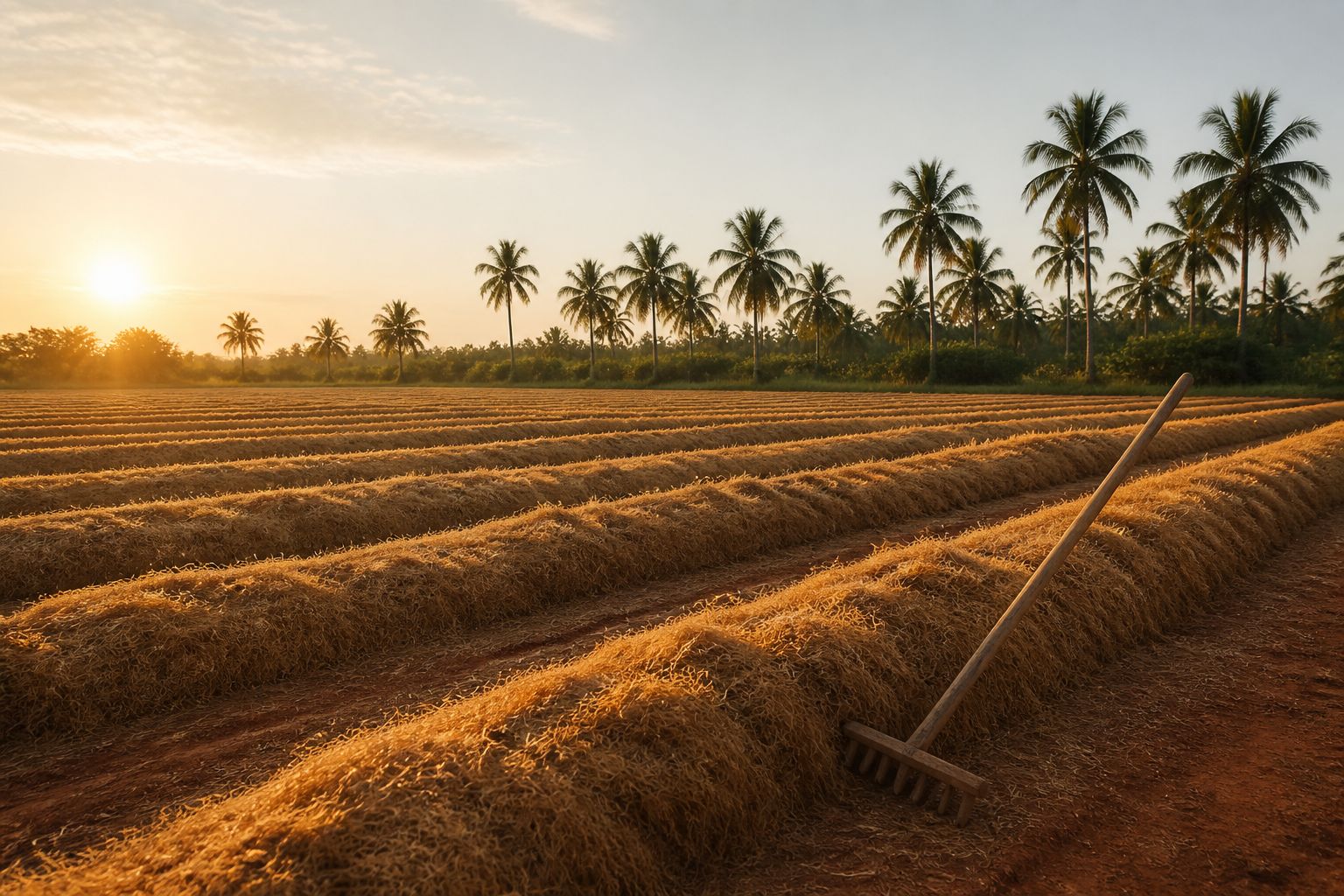
The light comes late to Pollachi, because the mountains stand in its way; the work does not wait for it. By the time the sun clears the Anaimalai wall the yard has been moving for the better part of an hour. Long ridges of pith lie black-brown against the red laterite, and the rakes are already opening them to the sky, row after row, with the sound of slow sweeping. A drying yard is not a factory and does not sound like one: there is the hush of the rakes, a pump running somewhere behind the mill wall, the first crows arguing in the palms. At the gate a boy splits a tender coconut and drinks the இளநீர் while the dew burns off the grass. This is the quiet middle of the trade, the six weeks nobody ships, nobody advertises and nobody sees; the house spent a morning inside them, and set down what follows.
Note I
The Husk
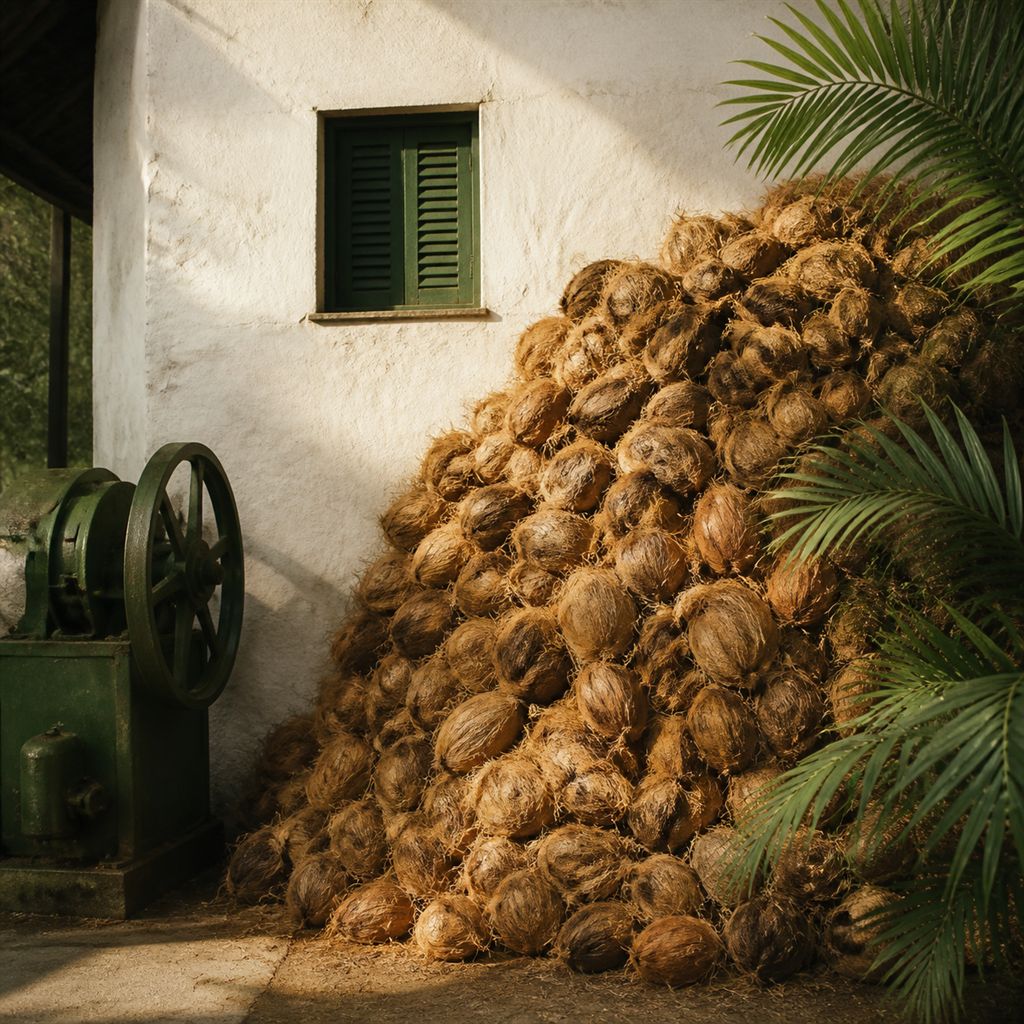
Everything on this ground was a husk first. The husk is the palm's own packing: the thick fibrous jacket grown around the nut so that it can fall a palm's height and take no harm; the part a kitchen discards and this district collects. It arrives at the mill in hills, and its unmaking begins in water. The husks are soaked until the stiffness leaves them and the fibre loosens its grip; then the mill takes them, and the mill's whole purpose is a single separation: fibre from pith.
The long strands go one way, to be cleaned and baled for the rope and matting trades that gave coir its name. What remains is pith: the fine brown crumb that held the fibres apart inside the husk, a sponge of the palm's own manufacture. For a long age it was the leaving of the leavings, heaped beside the mills for want of a use; the growing world has since learned very much better. But pith comes off the mill wet through, and wet pith is not yet a product. It is an obligation, and the yard is the ground on which the obligation is discharged.
Note II
The Sun
The pith is carted to open ground and laid out in windrows: long, low ridges running the length of the yard. Each morning the rows are raked open and turned, so that yesterday's underside faces the sky; each evening they are drawn together and gathered in before the dew comes down, because a night of dew can undo a day of sun. The rhythm does not vary and cannot be handed to machinery: rake at first light, turn through the morning, gather before dusk; and again, and again. Six weeks of sun stand between husk and block, and the six weeks are the point.
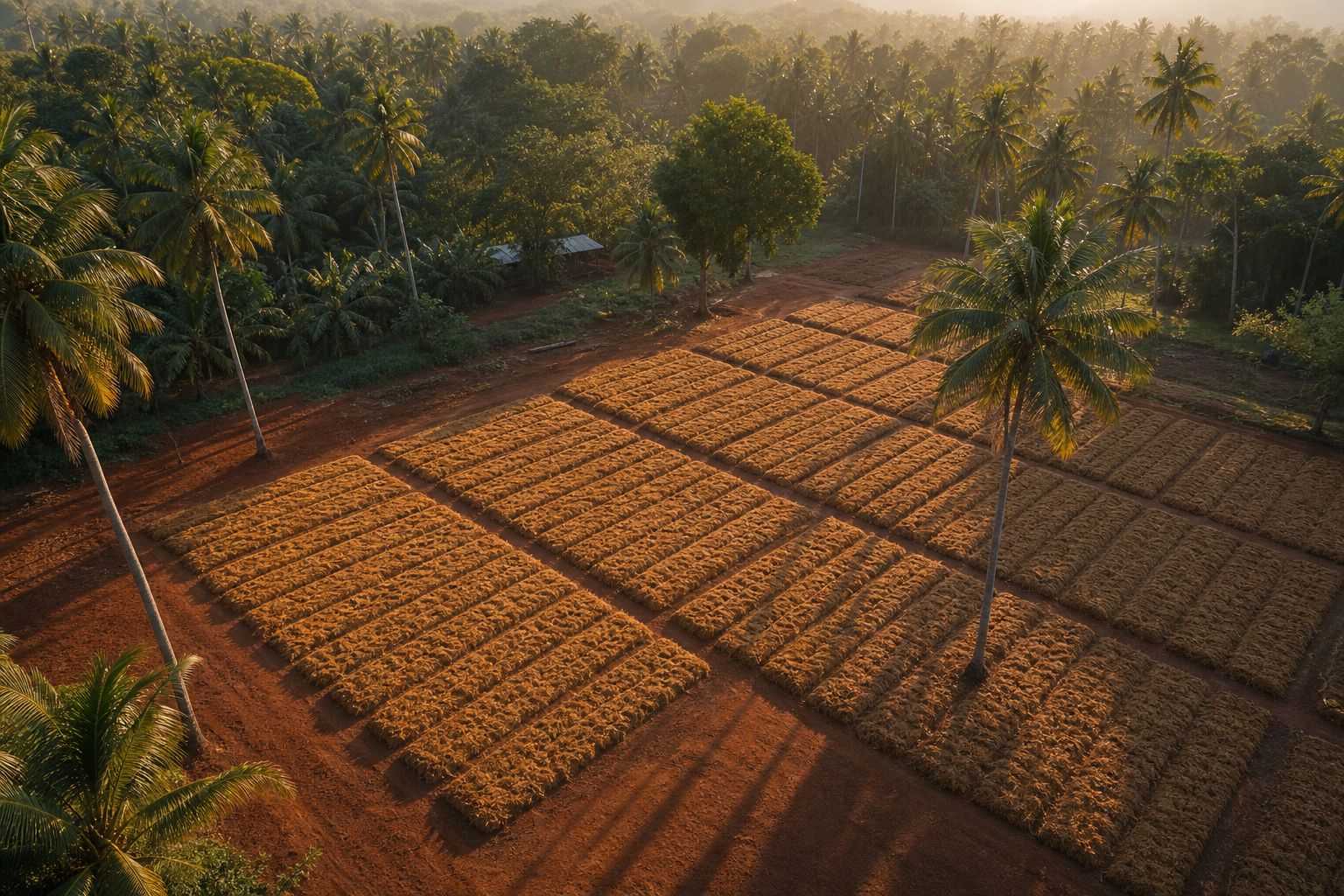
Sun-curing cannot be rushed, and the reasons are practical rather than sentimental. Slow drying lets the moisture leave the crumb evenly, from the heart of the ridge and not merely its skin, so that the pith keeps the open, springing structure a grower's roots will one day depend on; heat forced in a hurry dries the outside and seals the damp within. And a yard in a hurry sends its haste downstream. Pith baled damp to catch a boat carries the dampness into the press; a block made from it takes water back unevenly, and the fault surfaces months later in a glasshouse on the far side of the world, where the crop cannot be resown and the season cannot be returned. The grower pays for the day the yard saved. So the yard does not save days.
Note III
The Calendar
What governs the six weeks is not the order book; it is the monsoon. Rain and drying ground cannot hold the same yard, and so the whole trade bends its year around the wet months. Through the dry season the yards run full and the presses run behind them, building stock against the rain; when the rain comes, the work moves under roofs, to milling and screening and mending, and the yards stand swept and empty, waiting for the sky to finish. Ask a yard master for a delivery date and he will look up before he looks at any diary; the honest ones quote the sky.
The monsoon cannot be argued with; it can only be scheduled around.
The house keeps its own promises inside that truth. A pallet dated with the weather in mind is a date that holds; a pallet dated against the weather is marketing. Growers who plan a season on this fibre deserve the first kind, and the trade in Pollachi has had long practice in telling the two apart.
Note IV
The Block
When the windrows have given up their weight, the pith leaves the yard for its last discipline. It is washed, so that the salts carried in husk and air are drawn away; dried once more; screened, so that the crumb runs even and the stray long fibre is taken out; and then pressed into blocks, dense, dry and squared, built to travel. Compression changes nothing that matters: the block is simply the yard's six weeks folded into a shape a container understands, waiting for a grower's water to open it again.
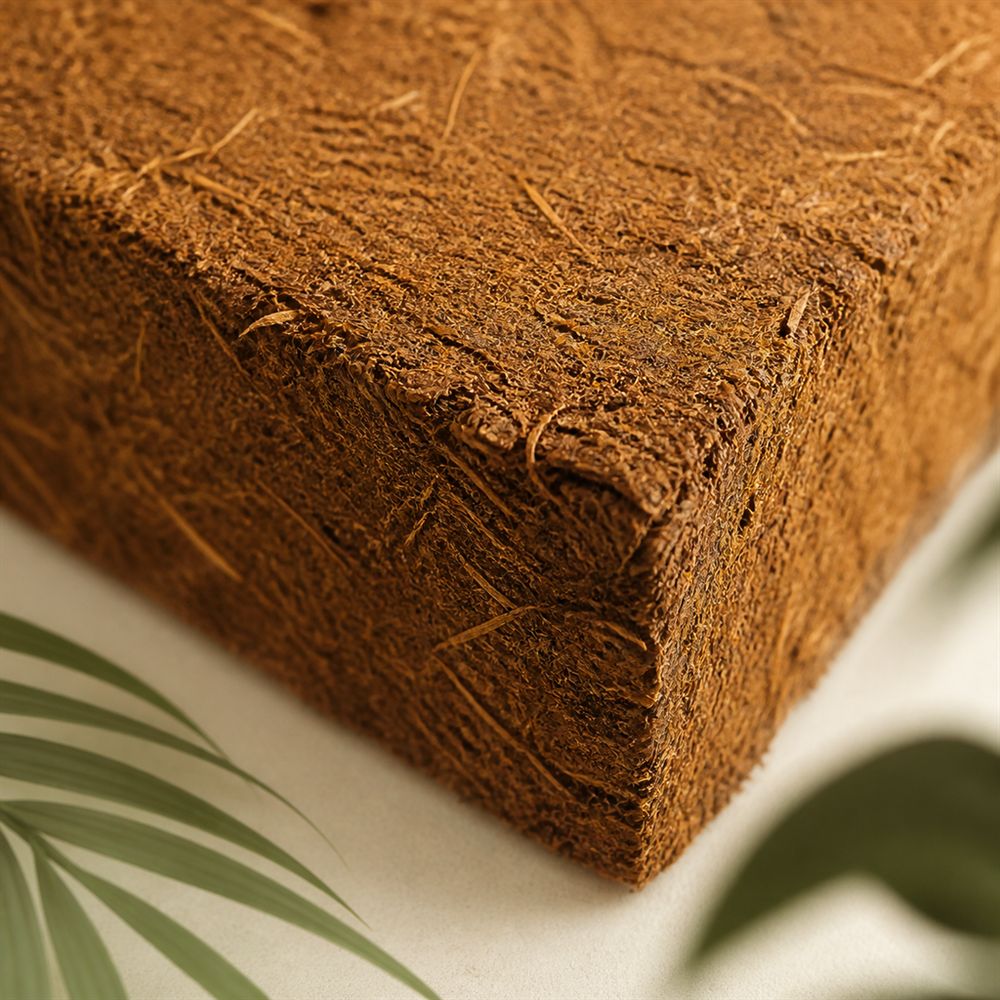
A good block owes everything to what stood upstream of it. Its evenness is the screen's work and its cleanness is the wash's; but its temper, the way it drinks and swells and springs open in the tray, belongs to the yard, and no press can put in what the sun did not. That is why the house's verification begins on the red earth rather than at the port: the pallets that leave for the United Kingdom are tested and numbered, but the numbers only confirm what the windrows decided weeks before. By the time the sun stands fully clear of the mountains, the rows lie open, the dew has gone, and the morning's work is finished until evening calls it in: six weeks of sun, taken one day at a time, on ground that has learned patience from the weather.